
- info@selfchec.org
Powered by Google  Translate
TranslateProstate Cancer

Prostate Cancer Tests Can Be Confusing

Here’s What We Suggest
Prostate cancer is the most common cancer in men. Detected early, it can be treated and often cured. That’s the good news.
Try To Weigh Risks And Benefits
The bad news is that although Prostate cancer screening tests can find Prostate cancer at an early stage, the medical community remains divided on whether surgery and/or radiation is a good choice for slow-growing Prostate cancers, and often counsel watching and waiting because treatment has its own sometimes severe side effects.
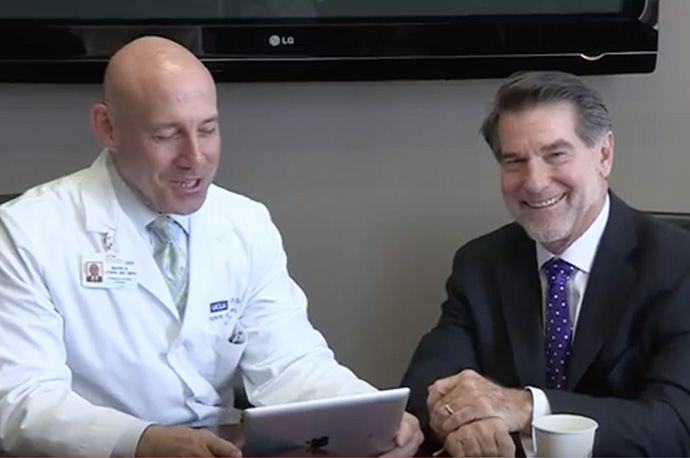
In The Video Below, Steve Garvey (Legendary Baseball Player) And His Doc Talk About Some Of The Concerns And Questions You May Have
Risk Factors
Click the Prostate Cancer Risk Calculator Tool from The Siteman Cancer Center to help determine what your Prostate cancer risk factors are and what you may be able to do to reduce your chances of being diagnosed.
Factors that may or may not increase your risk of Prostate cancer include:
- Your age. Your risk of Prostate cancer increases with age.
- Race. Black men are at greater risk of developing advanced or aggressive Prostate cancer than men of other races.
- Family history of prostate or breast cancer. If men in your family have had Prostate cancer, your risk may be increased. Also, if you have a family genetic history of BRCA1 or BRCA2, the best-known genes linked to breast cancer risk, or a strong family history of breast cancer, your risk of Prostate cancer may be higher.
- Obesity. Obese men diagnosed with Prostate cancer may be more likely to have advanced disease that’s more difficult to treat.

Age Guidelines

Beginning at age 40, or possibly earlier,
if you have a family history of Prostate cancer or are black, you need to talk to your health professional about getting a yearly Prostate-Specific Antigen (PSA) and Digital Rectal Exam (DRE).
Beginning at age 50,
Some health professionals think that men younger than 75 should have yearly (PSA) tests; others do not.
Not all prostate cancers are life-threatening, and treatments can cause side effects. Sometimes high (PSA) levels can be caused by infections, BPH, or small cancers that may not grow or spread. Your doctor may prefer “watchful waiting” until there are signs that treatment is needed.
Researchers are studying ways to improve the (PSA) test so that it detects only cancers that need treatment.
Signs And Symptoms
The following prostate cancer signs and symptoms may mimic those of other conditions. You may have no signs or symptoms in its early stages. Check with your health professional if any of the following signs or symptoms last more than a week or so:
- Trouble urinating.
- Decreased force in the stream of urine.
- Blood in the semen.
- Bone pain.
- Erectile dysfunction.
- General abdominal or pelvic discomfort and/or pain including gas, indigestion, nausea, pressure, swelling, bloating and cramps.
Prostate enlargement happens to almost all men as they get older. It does not raise your risk of prostate cancer.

Reduce Your Chances Of Getting Prostate Cancer

There is no clear answer to preventing prostate cancer. As with other cancers and other chronic diseases it’s important to make daily choices that will benefit your overall health. It’s also important to talk to your health professional to see if you have any personal risk factors, and what you need to do to reduce them. The following may help you reduce risks of prostate cancer:
- Getting a yearly doc-chec.
- Exercising.
- Eating healthy.
- Maintaining a healthy weight.
- Quitting smoking.
Resource: CDC, UCLA Health, Mayo Clinic, PubMed, Cebp.aacrjournals
Frequently Asked Questions
.gif)
We’re done our research and will help you make the best decisions for yourself about the screening tests available, and prostate cancer prevention and early detection. Read more
Use the prostate cancer Risk Calculator Tool from The Siteman Cancer Center on this page. It will help you determine if you do. Read more
Your family health history and race can impact on when you need to start checking. Read more… Read more
Certain other problems can mimic prostate cancer. Find out what they are… Read more
Take life-saving actions and make healthy choices. We’ll show you how… Read more

.png)